How To Enable Programs to Run as Administrator in Windows Vista

Quickly setup programs in Windows Vista to 'Run as Administrator'

by

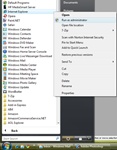
Here's a quick way to enable programs to 'Run as Administrator' in Windows Vista.

  1. Click on the 'Start' menu button, it's the blue circle located on the left-hand side of the Task bar.
  2. Now click on 'All Programs'
  3. Find the program you want to 'Run as Administrator' and then right-click the program and select 'Run as Administrator' from the menu box.
  4. A User Account Control box will pop-up, just click the Continue button, which will allow Vista to open the program running as Administrator.
  5. That's it.

Note: You can also start Programs to 'Run as Administrator' that are located on your Desktop or in folders found elsewhere on your computer, and 'Run as Administrator' by right-clicking on the program (or its short-cut) and selecting 'Run as Administrator'.


0
0

Add your comment

by Anonymous - Already have an account? Login now!
Your Name:

Comment:
Enter the text you see in the image below
What do you see?
Can't read the image? View a new one.
Your comment will appear after being approved.

Related Posts


This virus has been hitting systems for years, and has been resurging lately. Two computers in my household were infected within the same week, by different web sites. The virus may be getting around by an infected advertisement. Web owners accept the ad,...  more »

Today, Microsoft released new FREE Anti-virus and malware protection software called Security Essentials. Microsoft Security Essentials (MSE) is a real-time anti-virus scanner that anyone can download for free and use for personal use. You can use...  more »

GodMode is a hidden system control panel in Windows 7 that lets you access all the operating system's control panels from within a single folder without the need to browse options and folders in the Control Panel. To access "GodMode" follow these steps:...  more »

Zipping a file or folder up can be a great way to compress the file in order to make the file size smaller and easier to manage. It can be especially useful when you want to send a large file to someone via email, since most email hosts limit the file...  more »

In the code below, you will be able to find the baseUrl of your website using javascript. The following javascript code will work when used on your localhost or when it's used in a live site (finds the root url of the domain address). Just add this...  more »

There may be a time when you want to get a larger detailed view of a photo on Instagram. Unfortunately, Instragram currently doesn't have a feature to enlarge or magnify photos within the Instagram iphone app. However, with a little change to your iPhone...  more »

Ever since moving to a Windows 7 (64 bit) computer, I haven't been able to view Photoshop thumbnail previews of .psd files in Windows Explorer. However, today I decided to find a solution to this anonying problem, so that I could start seeing previews of...  more »

By default the Quick Launch bar is no longer enabled in Windows 7, which is where the Show Desktop shortcut icon button resided in previous version of Windows. Don't worry, the Show Desktop feature is still included in Windows 7, it's just been redesigned...  more »

Turn on Automatic Updates in Windows XP so that new security updates from Microsoft will be automatically downloaded and installed on your computer. By enabling Automatic Updates you will help make your computer safer from internet security threats and viruses.  more »

One of these useful features is the pivot table function. You can find it in all spreadsheet applications. The present guide shows how to create a pivot table in the Calc application of LibreOffice, which is the Ubuntu Linux version of Calc in...  more »

Learn how to get the latest security updates and service packs for your Microsoft Windows computer.  more »

This step-by-step goes through the process of importing delimited text files into a SQL Server 2005 database. The example should help you better understand how to import different types of flat files into SQL Server 2005.  more »